Understanding SaMD
SFDA’s Regulatory Framework for SaMD
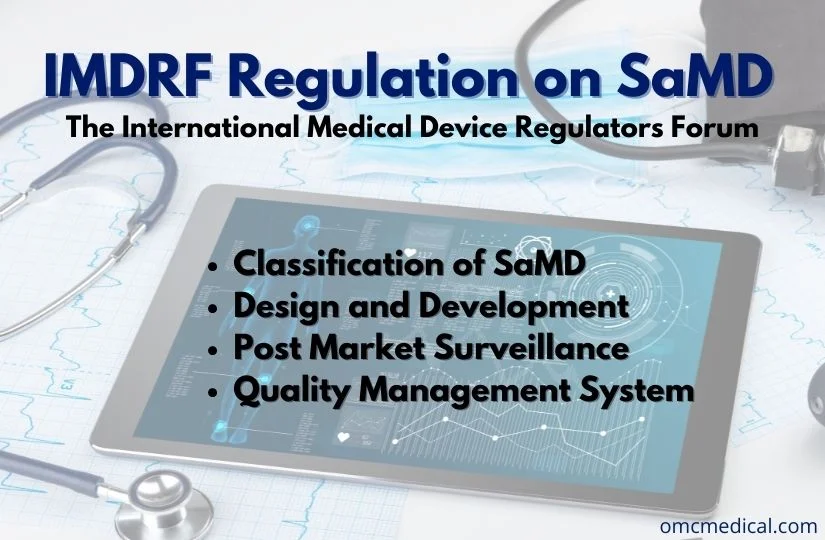
Key Factors in SaMD Categorization
Ready to Streamline Your Regulatory Compliance?
Join hundreds of companies who trust OMC Medical for their regulatory needs. Get expert guidance and ensure compliance across all markets.
Call Now +44 208 066 7260- To Treat or Diagnose: SaMD that provides information prompting immediate actions for treatment or diagnosis.
- To Drive Clinical Management: SaMD that aids in enhancing the safe and effective use of medical interventions.
- To Inform Clinical Management: SaMD that offers information without triggering immediate action, supporting long-term health management.
State of the Healthcare Situation or Condition:
- Critical Situation: Life-threatening conditions requiring immediate intervention.
- Serious Situation: Conditions where timely treatment is essential to prevent significant health deterioration.
- Non-Serious Situation: Situations where delayed intervention would not result in serious consequences.
SaMD Categories
| State of Healthcare situation or condition | Significance of information provided by SaMD to healthcare decision | ||
| Treat or diagnose | Drive clinical management | Inform clinical management | |
| Critical | IV | III | II |
| Serious | III | II | I |
| Non-serious | II | I | I |
Criteria for Category IV
- SaMD that provides information used for treating or diagnosing a disease or condition in a critical situation or condition falls under Category IV.
Criteria for Category III
- SaMD that provides information to treat or diagnose a disease or conditions in a serious situation or condition is a Category III and is considered to be of high impact.
- SaMD that provides information to drive clinical management of a disease or conditions in a critical situation or condition is a Category III and is considered to be of high impact.
Criteria for Category II
- SaMD that provides information to treat or diagnose a disease or conditions in a nonserious situation or condition is a Category II and is considered to be of medium impact.
- SaMD that provides information to drive clinical management of a disease or conditions in a serious situation or condition is a Category II and is considered to be of medium impact.
- SaMD that provides information to inform clinical management for a disease or conditions in a critical situation or condition is a Category II and is considered to be of medium impact.
Criteria for Category I
- SaMD that provides information to drive clinical management of a disease or conditions in a non-serious situation or condition is a Category I and is considered to be of low impact.
- SaMD that provides information to inform clinical management for a disease or conditions in a serious situation or condition is a Category I and is considered to be of low impact.
- SaMD that provides information to inform clinical management for a disease or conditions in a non-serious situation or condition is a Category I and is considered to be of low impact.
SaMD Registration Process in Saudi Arabia
1. Technical File Preparation:
2. Appointment of an Authorized Representative:
3. Submission of the Medical Device Marketing Authorization (MDMA) Application:
4. SFDA Review and Approval:
Post-Market Obligations
- Incident Reporting: Report any adverse events or malfunctions associated with the SaMD to the SFDA promptly
- Periodic Safety Updates: Provide regular updates on the SaMD’s safety and performance, as required by the SFDA.
- Compliance with Advertising Regulations: Ensure all promotional materials and activities comply with SFDA guidelines to prevent misleading information.