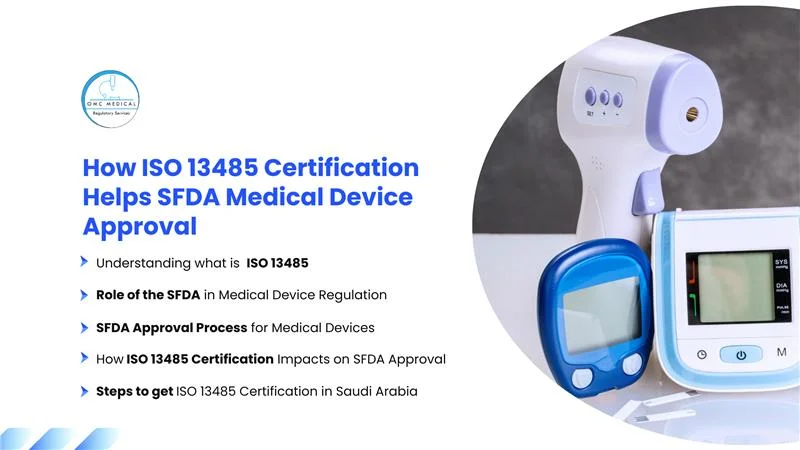
Understanding ISO 13485 Certification
The Role of the SFDA in Medical Device Regulation
Ready to Streamline Your Regulatory Compliance?
Join hundreds of companies who trust OMC Medical for their regulatory needs. Get expert guidance and ensure compliance across all markets.
Call Now +44 208 066 7260The SFDA Approval Process for Medical Devices
- Classification of the Medical Device: Devices are categorized based on their intended use and associated risk, ranging from Class I (low risk) to Class IV (high risk).
- QMS Implementation: Manufacturers must establish and maintain a QMS in line with the Saudi standard SFDA.MD/GSO ISO 13485:2017. This involves documenting processes, procedures, and responsibilities to achieve quality policies and objectives.
- Conformity Assessment: Depending on the device classification, manufacturers may need to undergo conformity assessments conducted by SFDA-accredited Conformity Assessment Bodies (CABs). These assessments verify that the device meets all regulatory requirements.
- Submission of Technical Documentation: Comprehensive technical documentation, including device descriptions, design and manufacturing information, risk management reports, and clinical evidence, must be submitted to the SFDA for review.
- SFDA Evaluation and Approval: The SFDA reviews the submitted documentation and, if satisfactory, grants marketing authorization, allowing the device to be placed on the Saudi market.
How ISO 13485 Certification Supports SFDA Medical Device Approval
- Demonstrated Commitment to Quality: ISO 13485 certification signifies that a manufacturer has implemented a robust QMS, aligning with international standards. This demonstrates a commitment to quality and patient safety, which is highly regarded by regulatory authorities like the SFDA.
- Simplified Regulatory Compliance: The SFDA recognizes ISO 13485 as the foundation for QMS requirements. Compliance with this standard ensures that manufacturers meet the SFDA’s expectations for quality management, simplifying the approval process.
- Efficient Conformity Assessments: Manufacturers with ISO 13485 certification are better prepared for conformity assessments, as their QMS aligns with the requirements evaluated during these assessments. This alignment can lead to more efficient evaluations and quicker approvals.
- Enhanced Risk Management: ISO 13485 emphasizes risk management throughout the product lifecycle. A certified QMS ensures that potential risks are identified, evaluated, and mitigated, aligning with the SFDA’s focus on device safety and efficacy.
- Improved Documentation and Traceability: The standard mandates thorough documentation practices, facilitating the preparation of technical files required by the SFDA. This comprehensive documentation enhances traceability and accountability, key components in regulatory submissions.
- Market Access and Competitive Advantage: ISO 13485 certification is often a prerequisite for market entry in various regions, including Saudi Arabia. It not only ensures compliance but also provides a competitive edge, as healthcare providers and stakeholders prefer sourcing from certified manufacturers.
Steps to Achieve ISO 13485 Certification in Saudi Arabia
- Gap Analysis: Assess the current QMS against ISO 13485 requirements to identify areas needing improvement.
- QMS Development: Develop and implement processes, procedures, and controls to meet the standard’s requirements, ensuring alignment with both ISO 13485 and SFDA regulations.
- Training and Awareness: Educate staff on the QMS and their roles within it to ensure effective implementation and compliance.
- Internal Audits: Conduct internal audits to evaluate the effectiveness of the QMS and identify opportunities for improvement.
- Management Review: Perform regular management reviews to assess the QMS’s performance and make strategic decisions for continual improvement.
- Certification Audit: Engage an accredited certification body to conduct the certification audit. Successful completion results in ISO 13485 certification, supporting the SFDA approval process.